We believe that performance metrics should be:
Fair
Skill-based
Hard to game
Comparable to players at your level
That’s why we don’t just count kills, headshots, or grenade damage. Instead, we measure how you perform in real in-game situations — and compare you to players in your own Elo bracket.
Let’s break it down.
Aim Score (0–100)
Your Aim Score isn’t just about headshot percentage. It’s about how you win your duels.
We measure three core things:
1. Reaction & First Damage Timing
When you see an opponent, how quickly do you deal meaningful damage?
Fast first damage usually means:
Good crosshair placement
Strong reaction time
Better readiness
2. Crosshair Placement
Were you already aiming close to the enemy when the fight started?
If your crosshair is positioned well before contact, you’ll:
React faster
Need fewer adjustments
Win more consistent duels
3. Accuracy in Real Fights
We measure your accuracy when enemies are actually visible — not when you’re spamming through smokes or pre-firing walls.
This ensures your Aim Score reflects real combat performance, not lucky damage.
Utility Score (0–100)
Utility isn’t about how many grenades you throw — it’s about how much they actually help your team.
We measure four main areas:
Flash Effectiveness
Did your flash actually blind enemies?
Did it lead to a kill or a successful site take?
A flash that creates impact scores higher than one thrown randomly.
Utility Damage
We measure grenade and molotov damage — but in a smart way.
Throwing five grenades for small chip damage won’t score higher than one grenade that forces enemies out of position and helps secure a round.
Space & Control
Did your smokes or molotovs help your team take space or hold a site?
Utility that leads to bomb plants, retakes, or successful holds has higher impact.
Waste & Mistakes
We also look at misused utility:
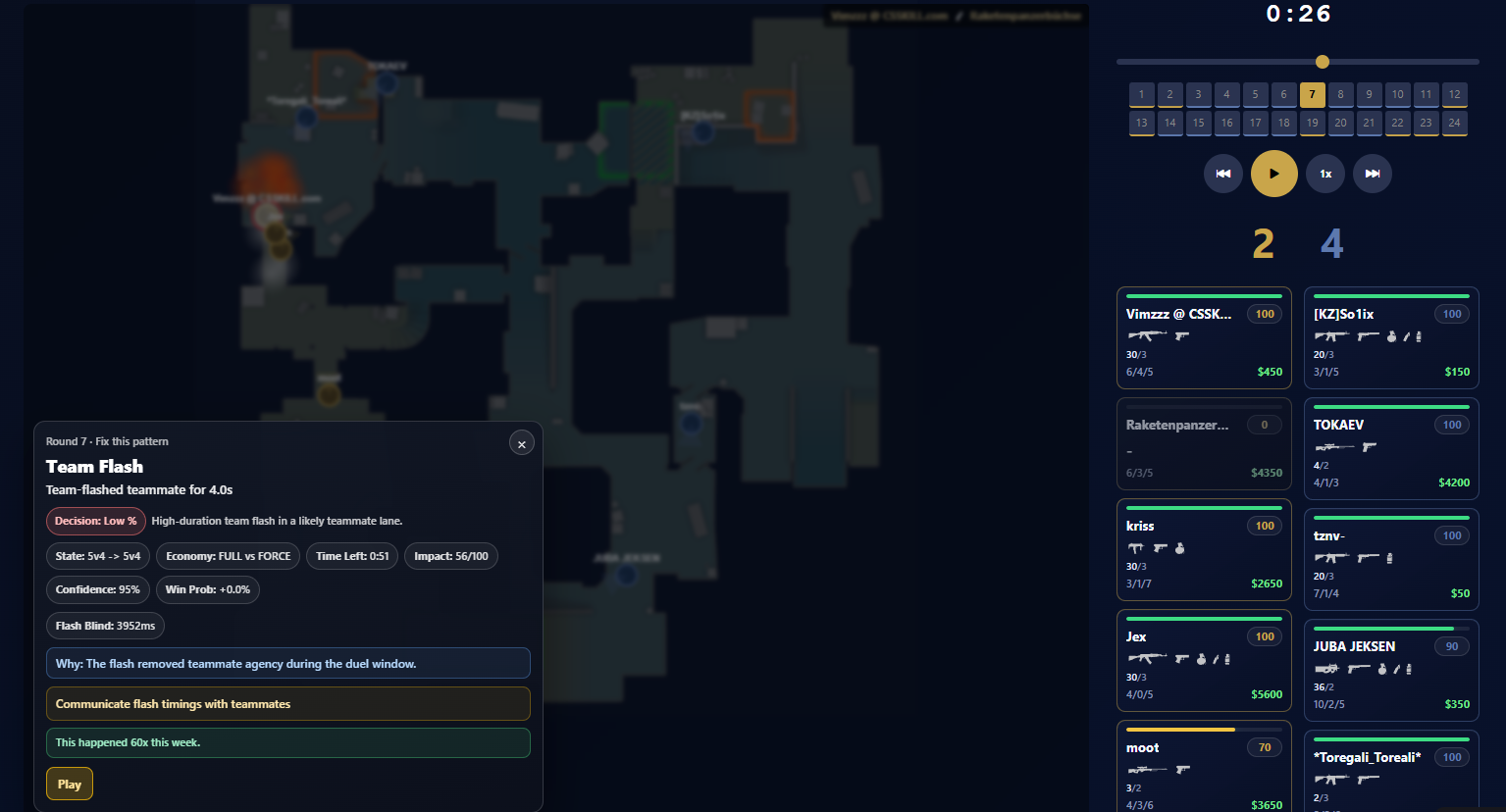
Team flashes
Zero-impact grenades
Early round throws with no follow-up
This helps keep the score honest.
Why Your Score Is Compared by Elo
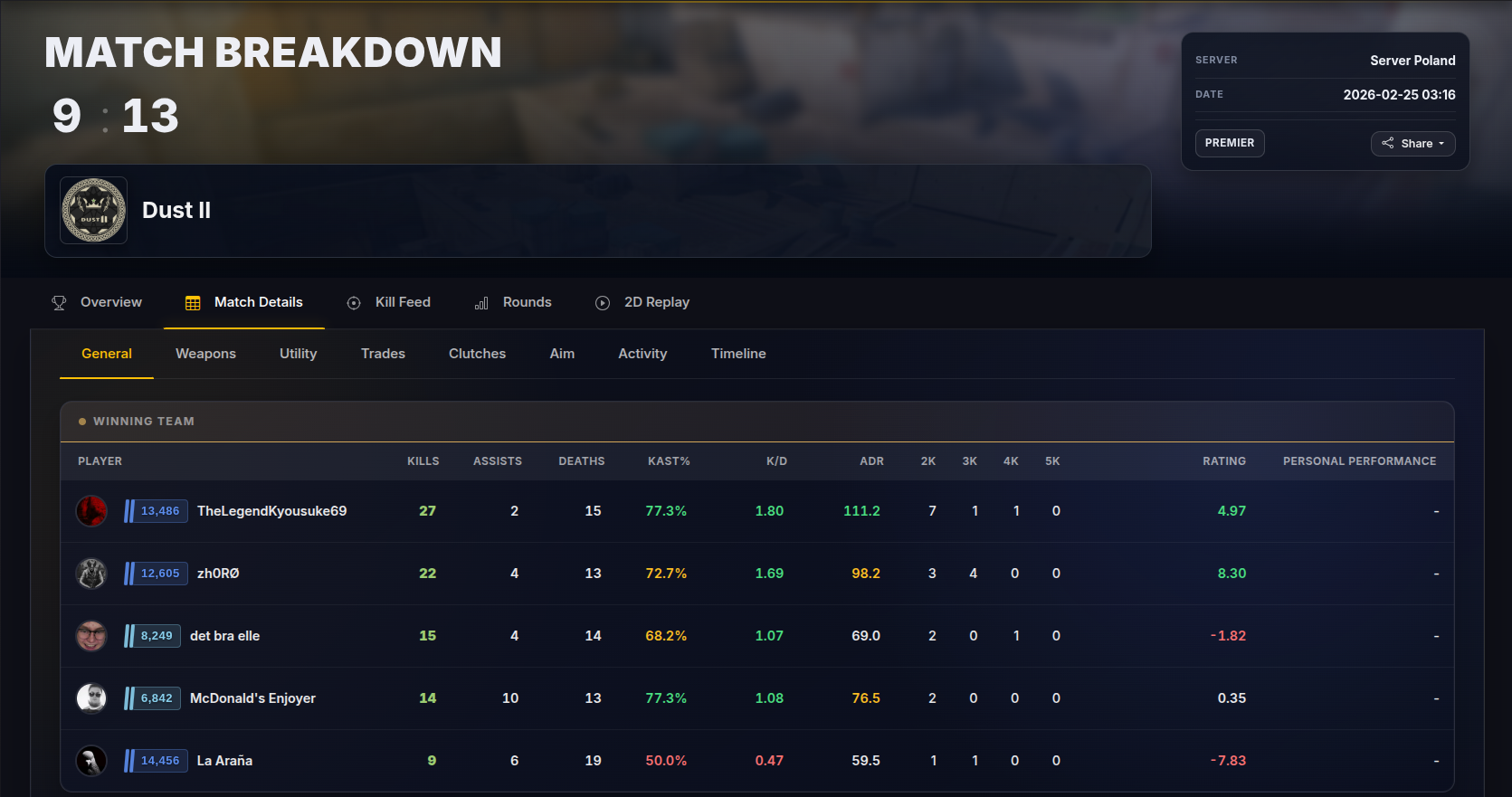
We don’t compare a 12,000 Elo player to a 25,000 Elo player.
That wouldn’t be fair.
Instead, we compare you to players in your own Elo bracket.
That means:
Your 75 Aim Score means you’re outperforming most players at your level.
Your 60 Utility Score means you’re below average for your rank — and that’s something you can improve.
This makes your score meaningful.
Why Scores Don’t Swing Wildly
You might notice your score doesn’t jump from 40 to 90 in one match.
That’s intentional.
We apply stability controls so that:
One amazing round doesn’t inflate your score
One bad game doesn’t destroy it
Consistency is rewarded
The more duels and utility situations you play, the more accurate your score becomes.
It’s Not Just a Number
Your Aim and Utility Scores power:
Match highlights
Actionable feedback
Trend tracking over 7 and 30 days
“Improved over time” insights
Timeline coaching moments
The goal isn’t just to give you a number.
It’s to help you understand:
What you’re doing well
Where you’re improving
What you should focus on next
The Bottom Line
Kills don’t tell the whole story.
Damage doesn’t tell the whole story.
Grenades thrown don’t tell the whole story.
We measure impact.
And we compare you fairly — against players at your level.
That’s how you improve.